English Graded Reader
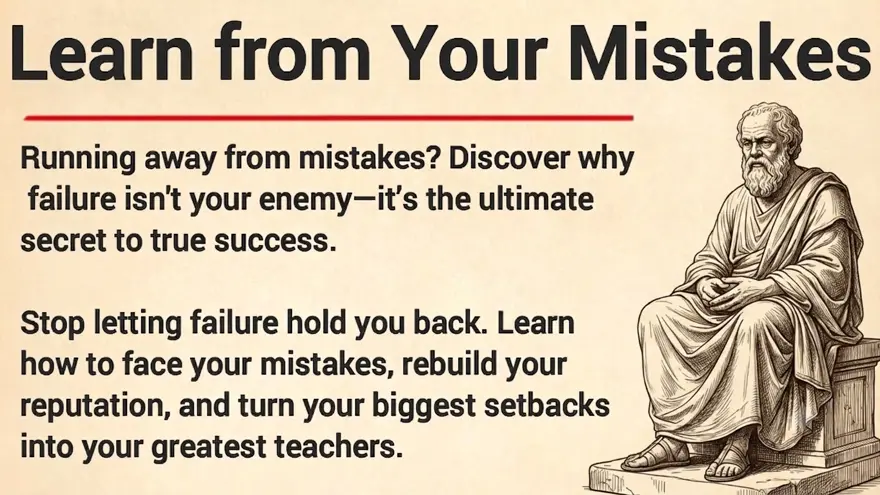
Failure is Your Best Teacher: How to Learn from Your Mistakes
Have you ever had a day where everything went completely wrong, and you felt like the universe was personally against you?
Maybe it was a project that fell apart, a business idea that crashed, or a mistake that cost you your hard-earned reputation. In those dark moments, it is incredibly easy to sink into despair, point fingers at bad luck, and ask the heavens: “Why does this always happen to me?”
But what if the obstacles crashing down around you aren’t a curse at all? What if they are actually a mirror, showing you exactly what needs to be fixed?
In this post, we are going to dive into the powerful, chapter-by-chapter story of Kiran—a hardworking but bitter milk seller who lost absolutely everything to a single broken wheel and a web of his own lies. His journey from total ruin to becoming the most trusted man in his region holds a timeless truth we all need to hear.
Read this story until the very last line, because the hidden lesson revealed by an old temple priest will completely transform the way you look at your struggles, your critics, and your deepest setbacks.
The Milk Seller’s Mirror: Finding Truth in the Spilled Milk
Chapter 1: The Broken Wheel
The sun had not yet risen over the holy waters of the river Ganga, but the morning air was already warm. In a sleepy little village near the riverbank, a man named Kiran was waking up. Kiran was forty years old, and for his entire adult life, he had done only one thing: sell milk.
Every single morning, while the rest of the village slept, Kiran would walk out to his small shed. He owned three cows. He would milk them, pour the white liquid into two heavy metal pots, load them onto his wooden cart, and walk down the dusty path to the village market.
But Kiran was not a happy man. If you looked at his face, you would only see a deep frown and tired eyes. He dragged his feet when he walked. He sighed constantly. To anyone who asked, Kiran had a ready answer: “Life is unfair. I am a cursed man.”
Lately, his complaints felt heavier. His business was slowly dying. His three cows looked thin and weak. One by one, his regular customers were stopping him on the road, saying, “Kiran, your milk doesn’t taste as rich as it used to,” before turning away to buy from someone else.
On this particular summer morning, the heat was suffocating. The air was thick with dust. Kiran was walking down the road, pulling his heavy cart, lost in his angry thoughts.
CRACK!
A sharp, violent sound shattered the morning silence. Before Kiran could even turn his head, the left wheel of his wooden cart snapped completely in half. The cart tilted violently to the side.
THUD! CLANGER!
The two large milk pots rolled off the wooden planks, hit the hard ground, and shattered into pieces. A white river of fresh milk rushed out, quickly soaking into the dry, thirsty dirt of the road.
Kiran stopped dead in his tracks. He stared at the wet, muddy ground. His shoulders dropped, and he sank onto a nearby rock. He buried his face in his rough hands and began to cry bitterly.
“Why does this always happen to me?” he wailed to the empty road. “Why am I so unlucky? God has cursed me! He wants me to starve!”
“Young man, why are you crying over spilled milk?”
Kiran snapped his head up. Standing a few feet away was an old woman with white hair, holding a walking stick. She had been walking down the path from the temple.
“Why am I crying?” Kiran shouted, his face turning red with anger. “Can’t you see? My whole day’s work is completely wasted! My earnings for the day are gone!”
The old woman did not look upset by his shouting. Instead, a gentle, knowing smile appeared on her wrinkled face. She looked at the broken wheel, then looked into Kiran’s eyes.
“Tell me,” she asked softly, “when did you last check your cartwheels?”
Kiran opened his mouth to argue, but the words caught in his throat. He stopped crying. He looked at the shattered wood of the wheel. He tried to think.
“I… I don’t remember,” Kiran whispered. “Maybe… never.”
The old woman stepped closer, her eyes sharp but kind. “So, tell me, whose mistake is this? Is it yours, because you did not care for your tools? Or is it God’s?”
Without waiting for an answer, she turned around and walked away, her walking stick clicking rhythmically against the dirt road.
Kiran sat in silence. The truth hit him like a cold wave. She was completely right. He never oiled the wheels. He never checked the wood for cracks. He just used the cart day after day, expecting it to work perfectly forever.
But admitting a mistake is hard. Instead of taking the lesson to heart, Kiran stood up, kicked a piece of the broken wheel, and walked home with a burning anger in his chest. “It’s not my fault,” he muttered to himself. “It’s that useless cart maker. He sold me bad wood.”
Chapter 2: The Taste of Dishonesty
Weeks passed, and Kiran’s life did not get any better because his attitude did not change. His cows grew thinner, his cart squeaked loudly, and his pockets grew emptier.
Then, one sunny afternoon, a wealthy merchant in fine silk clothes rode into the village. He stopped his horse right outside Kiran’s house.
“Are you Kiran the milk seller?” the merchant asked loudly.
“Yes, sir, I am,” Kiran said, bowing low.
“I have a big household with many servants and family members,” the merchant explained. “I need fresh, high-quality milk delivered to my mansion every single morning. Can you supply twenty liters of pure milk daily? I will pay you a very good price.”
Kiran’s heart leaped with joy. This was the miracle he had been praying for! “Yes, sir! Absolutely!” Kiran said quickly. “I will bring you the finest, richest milk in the valley.”
The merchant smiled, nodded, and rode away.
But as soon as the merchant disappeared, Kiran’s joy turned into a cold sweat. He walked to his shed and looked at his three weak cows. Together, on a good day, they could only produce fifteen liters of milk. Where was he going to find the missing five liters?
As he stared at the milk buckets, a dark, quiet thought entered his mind.
“Just a little water,” the voice whispered. “The merchant is a rich man. He has never milked a cow in his life. He won’t know the difference if I add just a few cups of clean water. It’s a very small lie.”
The next morning, Kiran milked his cows, fetched a pot of water from the well, and mixed them together until the bucket filled up to the twenty-liter mark.
When he delivered the milk, the merchant handed him a bright silver coin. Kiran had never earned so much money in a single day. He walked home feeling like the cleverest man in the world. “See?” he thought. “I am not cursed. I am smart.”
For many months, this routine continued. Kiran bought nice clothes, ate better food, and felt very proud of his secret trick. He thought his dishonesty was invisible.
But lies have a habit of growing heavy, and eventually, they break.
One chilly morning, when Kiran arrived at the merchant’s mansion, the gates were wide open, and the house was in chaos. Servants were running up and down the stairs. The merchant’s elderly mother had fallen desperately ill with a severe fever.
The village doctor was standing in the courtyard, holding a small bowl. The merchant stood next to him, his face pale with worry.
“The medicine must be mixed with the purest, strongest milk possible,” the doctor told the merchant. “If the milk is weak or thin, the medicine will not work, and her heart cannot handle it.”
The merchant looked up and saw Kiran standing there with his pots. “Kiran! Give me the milk immediately!”
The doctor took a ladle, dipped it into Kiran’s pot, and lifted it up. He poured it slowly back into the pot, watching the consistency. He frowned. He dipped a special tool into the liquid, checked it, and then looked up at Kiran with a look of pure disgust.
“This milk is fake,” the doctor declared loudly. “It is heavily mixed with water.”
The merchant’s face turned from pale to a deep, dangerous red. He walked up to Kiran, grabbed him by the collar, and dragged him out into the street where the villagers were beginning to gather.
“You thief! You cheater!” the merchant roared, his voice shaking the entire street. “I trusted you! I paid you fair silver! My mother is fighting for her life, and you have been feeding us watered-down lies! Look at him, everyone!”
Kiran’s face burned with intense shame. He looked down at his feet, unable to meet a single eye.
“Get out of my sight!” the merchant screamed, throwing Kiran to the ground. “I will never buy a drop of milk from you again. And I will make sure every soul from here to the river knows what kind of man you are!”
The merchant’s words were powerful. By that evening, the story had spread to every corner of the village. When Kiran walked down the road, mothers pulled their children away. His remaining customers threw empty buckets at his feet and told him to leave. His business was completely dead.
Chapter 3: The Secret of the Rotten Tree
That night, Kiran could not sleep. Every time he closed his eyes, he heard the merchant’s roaring voice and saw the disappointed faces of his neighbors. He felt suffocated by his own shame.
“I cannot stay here,” Kiran whispered into the dark room. “Everyone hates me. I will leave for the great city. The city is huge. Nobody knows my name there. I will start a fresh, new life where my past cannot find me.”
Before the sun could rise, Kiran packed a single cloth bag with a few clothes, left his home behind, and started the long, two-day journey toward the city.
By the afternoon of the first day, the sky grew dark and angry. Heavy, black clouds blocked the sun, and a furious rainstorm began to pour over the deep forest trail Kiran was walking on. The wind screamed through the trees, and lightning flashed across the sky.
Terrified of the lightning, Kiran ran toward a massive, ancient oak tree that stood by the side of the road. Under its thick canopy of leaves, another traveler was already sitting, shivering from the cold. He was a young man, barely twenty years old, holding a small bundle of belongings.
“This storm is terrible!” the young man shouted over the roaring wind as Kiran sat down next to him. “I am trying to get to the city to find work, but the sky wants to stop me!”
Kiran just nodded, too tired and miserable to talk.
For two hours, the storm raged on. The rain became so heavy that they could barely see the road in front of them. Suddenly, above the sound of the thunder, a terrifying CRACK-CRACK-CRACK echoed directly above their heads.
The young man looked up, his eyes widening in pure horror. “The tree! It’s splitting! RUN!”
Both men leaped forward, throwing themselves into the muddy, pouring rain, rolling across the dirt.
BOOM!
With a sound like thunder, the massive, ancient tree crashed heavily to the earth, slamming directly onto the exact spot where Kiran and the young man had been sitting just a second before.
For a long time, both men lay in the mud, panting heavily, their hearts hammering against their chests. They had escaped death by a matter of inches.
Slowly, the young man stood up, wiping mud from his face. He walked over to the shattered base of the fallen tree and looked closely at the broken trunk.
“Look at this,” the young man said, pointing his finger. “How strange.”
Kiran walked over and looked. The outside of the tree looked thick, strong, and covered in healthy green moss. But the entire inside of the trunk was black, hollow, and completely rotten. It was nothing but dust and decay on the inside.
“It looked so grand and strong from the outside,” the young man mused, shaking his head. “But it was totally empty and rotten inside. No wonder it couldn’t stand the storm. It was already dead; it just hadn’t fallen yet.”
The young man’s words hit Kiran like a physical blow. He stared at the dark, rotten wood, and his breath caught in his throat.
“Just like my life,” Kiran thought, a heavy sadness settling in his heart. “From the outside, I was showing everyone that I am a hardworking, honest milk seller. I wore nice clothes and held my head high. But on the inside, I was cheating. I was lying. I was as rotten as this tree. And just like this tree, when the storm of truth hit me, I collapsed because I had no inner strength.”
The rain began to slow down to a gentle drizzle. The two men picked up their bags and began to walk down the muddy path together. To break the heavy silence, the young man sighed and decided to share his own story.
“You know,” the young man said quietly, “I am running away, too. I used to work as an apprentice in a famous sweet shop in the northern town. The owner trusted me. But I became greedy. I secretly copied his secret recipe book, stole some money from the register, and ran away to open my own shop in a different district.”
“What happened?” Kiran asked, listening intently.
“At first, it was wonderful,” the young man admitted, looking down at his muddy shoes. “I made a lot of money. But I didn’t actually know the true art of sweet-making. I only knew the recipe, not the technique. When the seasons changed, my sweets began to spoil. I didn’t know how to fix it. My customers got angry, my reputation was ruined, and my shop failed completely. I lost everything.”
The young man paused, then looked up at the sky with a small, determined smile. “But now, I am going to the city to find an old master. This time, I don’t want to steal a secret. I want to work hard and learn the craft properly, the right way, from the very beginning.”
Chapter 4: The Priest’s Wisdom
By the time evening arrived, the two tired travelers reached a small, quiet village. At the edge of the village stood a beautiful stone temple surrounded by flowering trees. An old priest with kind eyes and a long white beard was standing at the entrance, welcoming travelers.
Seeing their wet clothes and exhausted faces, the old priest smiled warmly. “Come in, my sons. Rest your feet. The gods have plenty of food to share tonight.”
Inside the warm temple, the priest served them a simple, hot meal of rice and lentils on large green leaves. Kiran ate in silence, feeling a strange sense of peace that he hadn’t felt in a very long time.
After they finished eating, the priest sat down with them, pouring warm tea. “You both carry a heavy silence,” the priest said gently to Kiran. “What weighs so heavily on your soul, traveler?”
Kiran looked at the kind face of the priest, then down at his hands. Suddenly, he couldn’t keep it inside anymore. The dam broke. Kiran wept openly and confessed everything—the broken wheel, his anger at the old woman, the water he mixed into the milk, the merchant’s sick mother, and the terrible shame that drove him out of his village.
The old priest listened patiently, never once interrupting or shifting his gaze. When Kiran finally finished, wiping his tears, the priest smiled softly.
“Let me tell you a story about a young man I knew very well,” the priest said, his voice echoing softly in the quiet temple. “Many years ago, this young man inherited a beautiful piece of land from his father. But he was a lazy farmer. He hated the hard work of pulling weeds. He never repaired the fences, and he never checked the soil. He just scattered seeds and spent his days sleeping under the shade.”
The priest took a sip of tea. “When harvest time came, his fields produced almost nothing but thorns. The young man was furious. He blamed the seeds. He blamed the weather. He blamed his neighbors, claiming they had cursed his soil. He blamed everyone except his own lazy hands.”
“Then,” the priest continued, “a terrible drought hit the valley. It did not rain for months. Every single one of his remaining crops withered and died. He lost his home, his money, and his pride. He sat under a barren tree and cried for seven days and seven nights, cursing the heavens.”
“But on the eighth day,” the priest said, his eyes shining bright, “he stopped crying. And he started thinking. He looked at his dry hands and realized the truth. The drought didn’t ruin him; his own neglect had already ruined the farm long before the sun got hot. He realized that the drought was not his enemy. It was actually his greatest teacher.”
“What did he do?” the young man from the sweet shop asked eagerly.
“He became a student,” the priest replied. “He went to a wise, old farmer in a neighboring village and begged to work for him for free. For five long years, he worked from sunrise to sunset, learning everything about soil, water, and seeds from the very beginning. He didn’t look for shortcuts. When he finally saved enough to buy a tiny plot of new land, he applied everything he had learned. His harvests became the finest in the land, and he became a truly successful man.”
The old priest stood up and placed a heavy, warm hand on Kiran’s shoulder.
“Remember this, my son: Failure is not your enemy. Failure is your absolute best teacher—but only if you are willing to quiet your pride and become a student. If you run away from your mistakes, you are running away from the lessons that can save you.”
Chapter 5: The Journey Back
That night, the sweet shop apprentice slept soundly, snoring softly in the corner of the temple. But Kiran lay wide awake on his woven mat, staring up at the stone ceiling.
The priest’s words were ringing like a great bell inside his mind.
He thought about the broken cartwheel—it wasn’t the cart maker’s fault; it was his own lack of care. He thought about the watered-down milk—it wasn’t bad luck that caught him; it was his own greed. He thought about the merchant’s sick mother—he had risked a human life just for a few silver coins.
As the hours passed, the heavy weight of anger in his chest began to melt away, replaced by a clear, sharp resolve.
Just before the first light of dawn broke through the temple windows, Kiran stood up. He packed his small cloth bag. He didn’t look toward the road that led to the city. Instead, he turned his face back toward the direction he had come from.
He was going home.
The journey back took two long days of walking under the hot sun, but this time, Kiran did not complain once. His feet felt lighter because his mind was clear. He wasn’t running away anymore.
When he finally walked down the familiar path into his own village, his wife was standing in the doorway of their small home. Her eyes went wide with shock when she saw him walking up the path.
“Kiran?” she whispered, running out to meet him. “You… you came back? I thought you went to the city to stay.”
Kiran dropped his heavy bag on the ground and looked into her worried eyes. For the first time in years, he didn’t frown. He gave her a small, tired, but genuine smile.
“Yes, I am back,” Kiran said firmly. “I am not running away from my life anymore. I made a terrible mess of things here, and I am going to stay right here until I fix every single mistake.”
Chapter 6: Facing the Shadows
The next morning, before the village grew busy, Kiran walked straight toward the grand gates of the merchant’s mansion. His heart was pounding loudly against his ribs, and his hands were sweating, but he did not turn back.
He knocked on the heavy wooden doors. A servant opened it, recognized Kiran, and immediately frowned. “What are you doing here? Get away before I call the guards!”
“Please,” Kiran begged, holding his hands together in a prayer gesture. “I do not want to sell anything. I just need to speak to your master for one minute. Please.”
Hearing the commotion, the wealthy merchant walked out onto the balcony, looking down with a stern, cold face. “What business do you have here, Kiran?”
Kiran stepped into the courtyard, dropped to his knees, and bowed his head until it touched the stone floor.
“Sir,” Kiran said, his voice trembling but clear. “I am here to say that I am deeply, deeply sorry for what I did to you and your family. I became greedy and lazy. I cheated your trust, and worst of all, I put your mother’s health in danger just to line my own pockets. I was completely wrong. I do not expect you to ever buy from me again, nor do I ask for your forgiveness today. I just wanted to face you and confess my crime properly.”
The merchant stood in absolute silence, staring down at the kneeling milk seller. His expression remained hard, but he did not call the guards. He simply turned around and walked back inside his house.
Kiran stood up, wiped the dust from his knees, and spent the rest of the day walking to the house of every single customer he had ever lied to or lost.
The reactions were brutal. Most people refused to even open their doors for him. Some people stood on their porches and shouted terrible names at him, calling him a thief and a fraud. A few threw dirty water toward his feet. But to every angry word, Kiran simply bowed his head, held his hands together, and said the same thing: “I am sorry. I was dishonest, and you deserved better. I will do better from now on.”
When the sun went down, Kiran went to his cowshed. He didn’t just milk the cows and leave. He spent three hours cleaning the damp floor, scrubbing away the old dirt. He brought them fresh, green grass and clean, sweet water. He patted their lean sides and whispered promises to care for them properly.
He spent the next day repairing his wooden cart. He replaced the cracked boards, bought a strong new wooden wheel, and spent hours oiling the axles until the cart moved completely silently, without a single squeak.
Chapter 7: Pure Milk, Slow Success
Months rolled by like the steady waters of the Ganga.
Kiran’s daily life was hard, much harder than before. Because he took excellent care of his cows, giving them premium feed and keeping their environment pristine, they became healthier. Their coats grew shiny, and their eyes became bright. But because he only had three cows, he still only produced fifteen liters of milk a day.
And now, Kiran never added a single drop of water.
Even when his family had very little money for food, even when his pockets were nearly empty, he stood by his rule: Only pure milk leaves this shed.
Every morning, he walked his silent cart to the edge of the market. He didn’t call out to people. He just sat quietly by his two pristine pots. At first, nobody came. People walked past him as if he were invisible. Sometimes, he would go home with half his milk unsold, and his family would drink it for dinner. But Kiran did not get angry. He did not blame God. He just woke up the next morning and tried again.
One Tuesday morning, an elderly woman who used to be his neighbor stopped in front of his cart. She looked at the clean metal pots, then looked at Kiran’s calm, patient face.
“Kiran,” she said doubtfully. “Is this milk actually good? My grandchildren are visiting, and I cannot give them watered-down junk.”
“It is pure, mother,” Kiran said softly, dipping a clean ladle into the pot. “If you take it home and find a single drop of added water, you do not have to pay me a single coin, now or ever.”
The old woman hesitated, then held out her clay vessel. Kiran poured the thick, creamy white milk into her container.
The next morning, the old woman returned. This time, she wasn’t alone; she brought her sister. “Kiran,” she said loudly so the nearby shoppers could hear. “The milk was wonderful. It boiled beautifully, and the cream was thick. Give me two liters today.”
Slowly, like a small stream carving its way through a great rock, the word began to spread through the village lanes: “Have you heard? Kiran has truly changed. His milk is the purest in the region now.”
One by one, his old customers began to return. They noticed how clean his cart was. They noticed how healthy his cows looked. But most of all, they noticed the honesty in his eyes.
Chapter 8: The Ultimate Lesson
Two years had passed since the day Kiran had run away in the rainstorm.
One bright morning, as Kiran was wrapping up his sales at the market, a familiar servant dressed in fine silk clothes approached his cart. It was the merchant’s servant.
“Kiran,” the servant said respectfully. “My master requests your presence at the mansion immediately. Bring your milk pots.”
Kiran’s heart gave a familiar flutter of nervousness, but he nodded calmly. He loaded his pots and walked up to the grand estate.
The wealthy merchant was sitting in his courtyard, drinking tea. His elderly mother was sitting in a chair next to him, looking healthy and vibrant under the morning sun. The merchant looked up and signaled for Kiran to sit down on a wooden bench.
“Kiran,” the merchant began, his voice calm and measured. “For the past year, I have been watching you very closely. I saw you stand in the streets and take the anger of this village without fighting back. I saw you rebuild your business from nothing but dirt.”
The merchant leaned forward. “But I am a businessman, and I do not trust words alone. Over the last six months, I have secretly sent my head servant to buy milk from your cart three different times. He brought it back to my house, and we tested it using the doctor’s tools.”
Kiran held his breath.
“Every single time,” the merchant smiled, his eyes softening, “the milk was completely pure. Rich, thick, and honest. I can see that the rotten inside of your tree has been completely cleared out, Kiran. You are a strong man now.”
The merchant stood up and placed a hand on Kiran’s shoulder. “My family needs a reliable supplier again. Will you do us the honor of supplying twenty liters of pure milk to our house every day? I will pay you double the market rate for quality you can guarantee.”
Tears of pure, overwhelming joy welled up in Kiran’s eyes and ran down his cheeks. He didn’t bow to the floor this time; he stood tall, looked the merchant in the eye, and smiled with deep gratitude.
“Yes, sir,” Kiran said, his voice thick with emotion. “I would be honored. And I promise you, on the holy waters of the Ganga, that every drop will be as pure as my heart can make it.”
From that day on, Kiran’s life transformed completely. His business did not grow overnight, but it grew steadily and strongly, built on a foundation of solid stone rather than rotten wood. Whenever something went wrong—if a cow fell ill, or if the milk production dropped—Kiran no longer wailed or blamed the heavens. He would simply sit down, look at the problem, and ask himself: “What is this situation trying to teach me?”
Years later, Kiran became the most successful and deeply trusted milk merchant in the entire district. He was no longer the tired, angry forty-year-old man who cried on the dusty road. He was a wise elder, respected by everyone who knew him.
One evening, a young man who had just started selling vegetables in the market came to Kiran’s beautiful farmhouse. The young man looked tired, angry, and miserable.
“Uncle Kiran,” the young seller said, sighing deeply. “My cart broke down today, and half my vegetables were ruined in the mud. Life is so unfair. Why am I so unlucky? What is the secret to your great success and happiness? How did you never fail?”
Kiran looked at the young man, and a beautiful, warm smile spread across his face. He looked up at the golden evening sky, remembering the broken wheel, the old woman with the walking stick, the black, hollow inside of the fallen oak tree, and the wise words of the temple priest.
“There is no secret, my son,” Kiran said gently, placing a hand on the young man’s shoulder. “And you are wrong about one thing—I did fail. I failed many times, and at one point, I lost absolutely everything, including my honor.”
The young man looked surprised. “Then how are you standing here today?”
“Because,” Kiran whispered, “I finally learned that failure is not the end of your story. Failure is simply a teacher in a harsh disguise. The day I stopped running away from my mistakes was the day my life truly began. I faced them. I learned from them. And that, my young friend, has made all the difference.”
The people who find true success and peace in this world are not the ones who never fail; they are the ones who have the courage to stop running, look into the mirror of their mistakes, learn the lesson, and try again with new wisdom. Don’t run from your broken wheels—let them teach you how to build a stronger cart.
A Note for the Listener: Life will test you many times. You will make mistakes, you will stumble, and you will experience failures that feel too heavy to bear. But remember this truth: every failure carries a profound lesson inside it.
Frequently Asked Questions (FAQ)
Q1: Why is failure considered the best teacher?
Failure is our best teacher because it strips away our pride and forces us to look at the truth. Success often makes us comfortable and lazy, but failure acts as a mirror, showing us exactly where our weak spots, bad habits, or lack of preparation lie. You cannot fix a mistake until you are fully aware of it, and failure makes that mistake impossible to ignore.
Q2: How can I start learning from my mistakes instead of feeling guilty?
The shift from guilt to growth happens when you change the question you ask yourself. Instead of asking, “Why does this always happen to me?” (which focuses on blame), ask yourself, “What is this situation trying to teach me?” Treat your failure like a science experiment—analyze what went wrong objectively, fix the broken parts, and try again without taking the setback personally.
Q3: What should I do when I feel like running away from a massive failure?
Running away only delays the lesson. When you experience a massive failure, the best steps are to:
- Pause and breathe: Accept the emotional shock without making immediate decisions.
- Take responsibility: Stop blaming external factors, luck, or other people.
- Face the music: Apologize to those affected, just like Kiran did, to clear your conscience.
- Rebuild slowly: Focus on fixing one small thing at a time with absolute honesty and quality.
Q4: Is it ever too late to fix a bad reputation caused by past mistakes?
No, it is never too late, but it requires patience. A ruined reputation cannot be fixed overnight with words or excuses. It can only be rebuilt through consistent, honest actions over time. When people see that you have genuinely changed your behavior and that you consistently deliver quality and integrity, trust will slowly but surely return.
Q5: What is the main moral of the story of the milk seller?
The main moral is that true success is built from the inside out. You cannot achieve long-term prosperity using shortcuts, lies, or neglect. When life tests you with a “storm” or a “broken wheel,” a weak, dishonest foundation will always collapse. True strength comes from facing your errors, becoming a student of your failures, and committing to the right path.
Conclusion
Turning Loss into Lessons
Kiran’s transformation reminds us of a fundamental truth about human nature: the easiest path is often to pack our bags and run away from our shame. We blame the economy, the timing, or the people around us. But just like the ancient oak tree in the storm, a grand exterior means nothing if we are neglecting the foundation on the inside.
True success doesn’t belong to the people who never stumble. It belongs to those who have the raw courage to return to their “villages,” look their mistakes in the eye, and do the hard work required to fix them.
The next time your cartwheel breaks, or a plan turns to mud, don’t ask why you are cursed. Breathe, quiet your pride, and ask the only question that matters: What is this situation trying to teach me?
💬 Let’s Talk in the Comments!
I would love to hear your thoughts. Have you ever had a major failure that turned out to be the best blessing in disguise? Drop a comment below and share your story—let’s inspire each other to keep learning!




 Life Quotes3 years ago
365 Depression Quotes and Sayings About Depression (Extremely Amazing)
- Inspirational Quotes3 years ago
342 Motivational & Inspirational Quotes
- Inspirational Quotes3 years ago
580 Motivational & Inspirational Quotes Life To Succeed
- Motivational Quotes3 years ago
600 Inspirational & Motivational Quotes About Life to Succeed
- Good Morning Quotes3 years ago
100 Beautiful Good Morning Quotes with Images That Will Enrich Your Day
- Sad Love Quotes3 years ago
110 Sad Life Quotes – Sad Quotes & Sayings About Sadness
- Sad Messages3 years ago
Top 70 Broken Heart Quotes And Heartbroken Sayings
- Inspirational Quotes3 years ago
97 Inspirational Quotes That Will Change Your Life