

Have you ever felt a surge of anger so hot that the rest of the world completely blurred out?
It is a terrifyingly human experience. In a single split second of rage, our brains shift from logic to destruction. We want to strike back. We want to make whoever hurt us pay. But have you ever stopped to consider what that blinding anger is actually costing you while you aren’t looking?
In today’s English Graded Reader edition, we share a deeply moving, simple, and dramatic story of a father who let his fury dictate his actions. This short story is not only a fantastic tool for practicing your English vocabulary and listening skills, but it also carries a haunting life lesson that you will never forget.
Read on to discover how a single afternoon of revenge cost a man a lifetime of happiness—and how you can protect yourself from making the exact same mistake.
Chapter 1: The Golden Morning
The morning sun rose like a warm, golden blanket over the valley. It was a perfect day. The air was fresh, carrying the sweet scent of damp earth and wildflowers.
A hard-working farmer decided to take his four-year-old son to the fields with him. The little boy was the light of the farmer’s life, with bright, curious eyes and a laugh that could cure any sadness.
“Stay here under the shade of this great oak tree, my son,” the farmer said gently, patting the boy’s head. “Papa has to work the soil, but I will be right here.”
The boy nodded happily, sitting down among the soft green grass to play with a few smooth stones. The farmer smiled, picked up his tools, and walked a few yards away to begin his daily labor. For a while, the only sounds were the rhythmic thud of the farmer’s hoe and the joyful babbling of the child. Everything felt safe. Everything felt peaceful.
Chapter 2: The Strike in the Grass
Then, the peace was shattered.
A sharp, terrified scream pierced the quiet morning air. It was a sound that made the farmer’s blood run cold.
Dropping his heavy tools into the dirt, the farmer sprinted back to the great oak tree as fast as his legs could carry him. His heart pounded wildly against his chest. When he reached the shade, he found his little boy clutching his ankle, tears streaming down his tiny face.
Just a few inches away, a long, dark snake was slithering rapidly through the grass. It had already delivered its deadly bite.
Looking at the two red marks on his son’s skin, a wave of pure, hot rage washed over the farmer. The sight of the retreating reptile blinded him to everything else.
“No, my son! No!” the farmer shouted, his voice shaking with fury. He looked from his crying child to the grass. “That monster will not get away. I will make it pay! I will find it, and I will make it suffer!”
Chapter 3: The Obsession
Completely consumed by anger, the farmer grabbed his sharp cutlass. He turned his back on his weeping child and chased the snake.
The serpent was quick. It darted across the dirt and vanished into a large, heavy pile of old logs at the edge of the field.
“You cannot hide from me!” the farmer screamed.
With fueled, unnatural strength, he began to lift the heavy logs. He threw them aside one by one, sweat pouring down his face, his muscles straining. His mind was locked onto a single, dark goal: revenge.
Finally, he reached the very last log. He tossed it aside, lifting his cutlass to strike. But the snake was fast. It leaped out from the shadows and darted into a small, deep hole in the ground.
The farmer did not hesitate. He fell to his knees and began digging furiously into the dirt with his cutlass. He hacked at the earth. He scooped away the soil with his bare hands. One hour passed. Then two hours. The sun rose high and hot in the sky, baking his back, but the farmer refused to stop. He dug and dug until his hands bleed, driven by a desperate need to destroy the creature that had harmed his blood.
At last, deep in the earth, he cornered the snake. With a final, angry strike, he ended its life.
Chapter 4: The Frozen Heart
The farmer breathed heavily, wiping the thick sweat and dirt from his forehead. He looked at the dead snake and felt a sudden flash of victory.
“I got you,” he whispered.
He turned around and ran back toward the great oak tree to show his son that the danger was gone. But as he stepped into the shade, his victory turned into absolute horror. His heart froze solid in his chest.
The little boy was no longer crying. He was lying completely still on the grass. His face was pale, and his breathing was dangerously shallow.
Panic, cold and heavy, struck the farmer like a lightning bolt. The anger vanished instantly, replaced by a terrifying realization. He scooped his small, limp son into his arms and began to run toward the village. He ran faster than he ever had in his life, crying out to the skies, desperate for a miracle.
He burst into the village doctor’s clinic, breathless and trembling.
“Please! Do anything to save him!” the farmer pleaded, his voice breaking into sobs. “Please, save my boy!”
Chapter 5: The Cost of Revenge
The doctor quickly took the child and laid him on the table. He checked the boy’s pulse, examined the bite, and looked into his eyes. After a long, quiet moment, the doctor slowly stepped back and shook his head. His eyes were filled with deep sadness.
“If you had brought him to me the exact moment he was bitten, I could have saved him,” the doctor said softly. “The poison was slow at first. But instead, you spent all those precious hours chasing the snake.”
The farmer stared at the doctor, the world spinning around him.
“You were so focused on revenge,” the doctor continued, “that you failed to see the real danger. While you were fighting the snake, your son’s life was quietly slipping away.”
The boy did not survive.
The farmer sank heavily to his knees, the weight of a crushing grief and endless regret crashing down upon him. He wept openly, explaining through his tears how he had lifted the logs, how he had dug the hole, and how he had focused entirely on killing the snake instead of comforting and rescuing his child.
The doctor listened quietly to the tragic tale. He placed a gentle hand on the grieving father’s shoulder and said:
“Anger and revenge can blind us completely. They trick us into thinking we are doing something important, while they secretly make us lose sight of what truly matters.”
Chapter 6: The Wisdom of the Heart
This story serves as a powerful mirror for human nature. It shows us just how destructive anger and revenge can truly be.
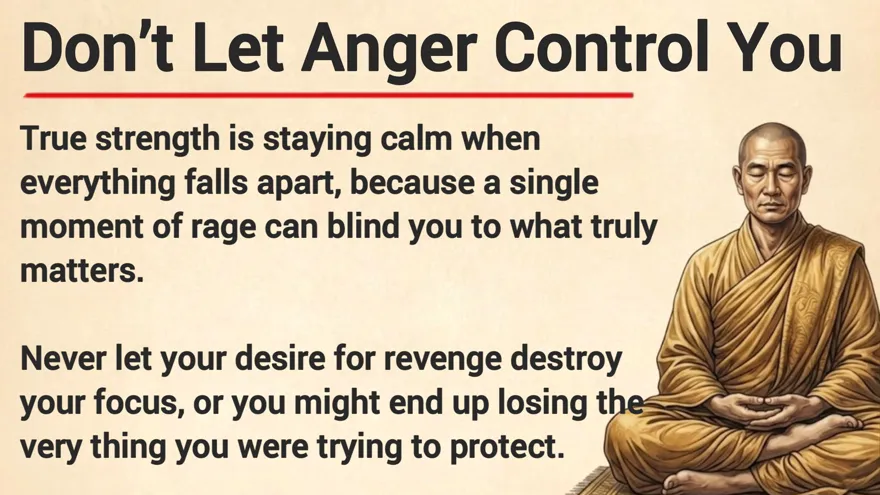
When we let rage take control of our minds, it blocks our ability to think clearly. It forces us to make choices that ultimately harm ourselves and the people we love the most. We often think that true strength means striking back, hurting those who hurt us, and demanding an eye for an eye. But the truth is entirely different.
- True strength is not found in revenge.
- True strength is found in the ability to stay calm in the middle of a storm.
- True strength is making wise choices when our emotions are running high.
Holding onto hatred traps us in a terrible cycle of pain. It makes us act without thinking, forces us to waste precious time that we can never get back, and causes us to lose the things that are truly irreplaceable.
Anger is a natural human emotion, but when it dictates our actions, it clouds our judgment. Life will always test us with sudden, difficult moments. In those moments, a calm mind and a wise choice can save what we love most. Revenge may feel satisfying for a fleeting second, but its price tag is often far greater than we can ever afford to pay.
By learning to let go, to focus on healing rather than hurting, we free ourselves from a heavy burden. Choosing patience, compassion, and understanding over rage does not make us weak. It makes us wiser, stronger, and truly capable of protecting the peace and love in our lives.
🙋♂️ Frequently Asked Questions (FAQ)
Q1: What is the main moral lesson of “The Farmer and the Snake” story?
The core lesson is that anger and revenge blind us to what truly matters. When we focus all of our energy on hurting those who have wronged us, we neglect the people, relationships, and responsibilities that actually need our protection and care.
Q2: What does “English Graded Reader” mean?
A Graded Reader is a story rewritten using simplified grammar and vocabulary. It allows English language learners (ESL/EFL) to enjoy immersive stories, practice active listening, and expand their vocabulary naturally without getting overwhelmed by overly complex words.
Q3: Why is anger considered so dangerous in this story?
Anger isn’t dangerous because it’s a bad emotion—feeling angry is completely natural. It becomes dangerous when it controls our actions. In the story, the farmer’s rage clouded his judgment, causing him to waste precious, irreplaceable hours chasing a snake instead of rushing his poisoned child to the doctor.
Q4: How does this story help improve my English listening and reading?
By reading along while listening to the narrative flow, you map the written text to spoken pronunciation. The story uses repetitive structural cues, simple chapter breaks, and evocative descriptions that help fix new verbs and emotional adjectives into your long-term memory.
Q5: How can I practice controlling my anger in daily life?
Psychologists often recommend the “Pause and Assess” method. When a wave of anger hits you:
Focus 100% of your immediate energy on solving the problem or protecting your peace, rather than punishing the other side.
Take three deep breaths to lower your heart rate.
Ask yourself: “If I react to this right now, what am I putting at risk?”
Conclusion
It is a painful truth to swallow: the farmer defeated the snake, but he lost his son. He won his petty battle, but he lost his entire world.
This tragic tale is a harsh reminder for all of us. Anger tricks us into believing we are fighting for justice, when in reality, it is just burning down our own house. True strength isn’t about how hard you can strike back when you’re hurt; it’s about having the wisdom to pause, stay calm, and protect what truly matters before it’s too late.
💬 Over to You!
What did you think of the farmer’s choice? Have you ever let anger get the best of you?
Leave a comment below with your thoughts—we read every single one! If this story moved you, please share it with a friend who might need a reminder to breathe and let go today.
Want more stories like this? Subscribe to our blog newsletter for weekly English learning stories and motivational life lessons!


0 Comments