English Graded Reader
How to Spot a Fake Friend Before It’s Too Late: A Lesson in Fake Friends | English Graded Reader
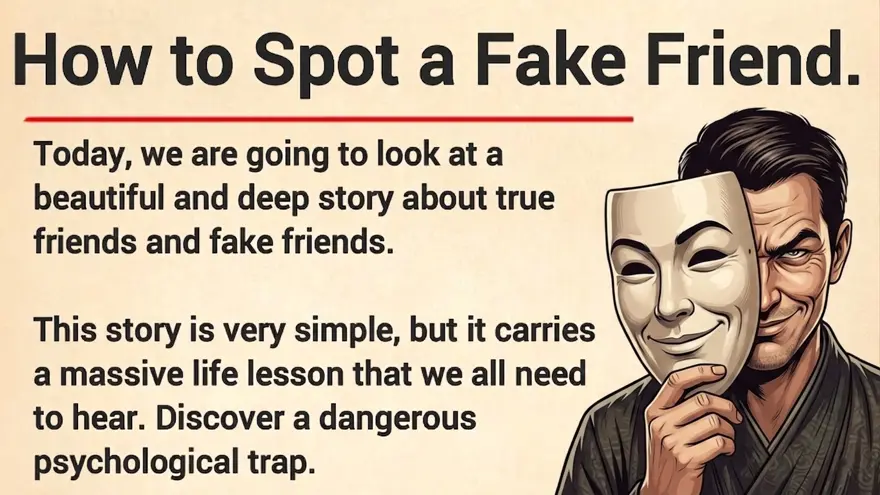
Have you ever met someone who always smiled at you, agreed with everything you said, and felt like a perfect friend—but later, they hurt you?
It is a painful truth of life: Not everyone who smiles at you is your true friend.
Welcome to another English Graded Reader story. Today, we are going to read a powerful, motivational story about a young zebra, a heavy rhinoceros, and a sweet-talking crocodile. This story will help you practice your English listening and reading skills, learn new vocabulary, and discover a very important life lesson.
Through this simple story, you will learn about a dangerous psychological trap. It will show you why the people who tell you the hard truth are often the ones who save you, while the people who give you “fake comfort” might be leading you into danger.
Grab a notebook, get ready to learn some great English vocabulary, and let’s dive into the story of the savannah!
Chapter 1: The Quiet Day
The savannah was perfectly still that morning. Golden sunlight washed over the tall grass, and a gentle wind blew across the plains, carrying the sweet scent of morning dew. It was the kind of peace that makes you feel safe.
In the middle of this quiet field, a young zebra stood alone, peacefully grazing. He moved slowly from one green patch of grass to the next, enjoying the warmth of the sun on his back. He felt completely secure. He had no eyes for the shadows, and no fear in his heart.
He had absolutely no idea that the next few minutes would alter the course of his life forever.
For a long time, nothing moved except the swaying grass. But peace on the savannah is often an illusion. Deep in the thicket, eyes were watching him. Danger was closing in, but it wasn’t the kind of danger the zebra was expecting.
Chapter 2: The Sudden Attack
Without warning, the morning silence shattered. The earth began to tremble. A low, heavy thundering sound vibrated through the soil, growing louder and faster by the second.
The zebra snapped his head up, his ears twitching in panic. Before he could even scan the horizon, a massive gray shape burst through the bushes. It was a giant rhinoceros, weighing thousands of pounds, charging at full speed. His eyes were locked dead onto the zebra.
The zebra frozen in terror. He tried to leap aside, but it was too late.
With a deafening grunt, the rhino slammed his massive, armored body straight into the zebra’s flank. The impact was horrific. The zebra was lifted off his feet and sent flying through the air, crashing violently into the thick, wet mud at the edge of the field.
A sharp cry of agony escaped the zebra’s throat. As he struggled to stand, a burning pain shot up his back leg. It was badly injured.
He looked up from the mud, his vision blurring, his chest heaving with fear and rage. The rhino stood just a few yards away, panting heavily, blocking the path ahead.
The zebra’s heart burned with sudden, fierce anger. Why would he attack me? he cried out in his mind. What did I ever do to him? I was minding my own business!
At that exact moment, the zebra knew one thing for certain: the rhino was his brutal, unprovoked enemy.
Chapter 3: The Hidden Trap
But anger is a blindfold. When rage takes control of the mind, the truth becomes completely invisible.
The zebra was so focused on his own pain, and so consumed by his hatred for the rhino, that he failed to notice what lay just inches behind his own tail.
Hidden masterfully in the deep, tangled grass was a deadly trap. It was a mass of jagged steel jaws, set by a hunter, designed to snap shut and crush the bone of any animal unlucky enough to step on it. Just one more casual step backward, and the zebra would have been caught forever, waiting for the hunter’s knife.
The rhino had seen it. He had watched the zebra wandering blindly toward the steel teeth. With no time to call out a warning, the rhino had used the only tool he had—his massive weight—to violently launch the zebra out of harm’s way.
Now, the rhino stood directly in front of that deadly trap, protecting the perimeter, blocking the path to destruction with his own scarred, heavy body.
But he did not speak. He did not explain himself. He simply stood his ground, breathing heavily in the sun.
The zebra, weeping from humiliation and physical pain, refused to look closer. He didn’t stop to ask himself the most important question: “Why did a creature who usually ignores me suddenly run so hard to stop me?”
Instead, cursing the rhino under his breath, the injured zebra limped away into the forest, seeking comfort far away from his “attacker.”
Chapter 4: The Voice of Sympathy
By the afternoon, the limping zebra reached the cool banks of the river. His leg was swollen, his pride was broken, and he felt utterly alone in the world. He collapsed near the water’s edge, nursing his wounds and letting his anger fester.
Suddenly, the glassy surface of the river rippled. Slowly, silently, a large crocodile glided out of the dark water and slid onto the muddy bank.
But the crocodile did not hiss. He did not bare his teeth. Instead, his eyes looked soft, heavy with sorrow, and his face seemed painted with the deepest sympathy.
“Oh, you poor thing,” the crocodile whispered. His voice was incredibly smooth, like silk sliding over stone. “That must have hurt so terribly. I saw what happened. That rhino is an absolute monster. So cruel. So senseless.”
The zebra gasped. For the hours since the attack, he had felt completely isolated. But now, for the first time, someone truly understood his pain. A warm wave of relief washed over him. Slowly, beautifully, his bitter anger began to melt into absolute trust.
There is a dangerous law of nature: when we are hurting, we naturally gravitate toward anyone who simply validates our pain and agrees with our grudges.
The crocodile crept a few inches closer, his voice dripping with gentle comfort. “You did nothing wrong, little zebra. You were completely in the right. No one in this jungle truly understands you or appreciates you. But I do.”
Chapter 5: Into the Deep Water
Those soothing words were exactly what the zebra wanted to hear. They were like medicine to his wounded ego.
He looked back toward the distant field one last time. Far away, on the edge of the horizon, the heavy silhouette of the rhino could still be seen. He was still standing in the exact same spot, stubborn and silent, never once coming to explain himself or beg for forgiveness.
The zebra shook his head in disgust. Some people protect you quietly, even if it means they must be misunderstood. But the zebra could not see that. He only saw a bully.
He turned his back on the rhino forever and looked at his new, gentle friend. “Thank you,” the zebra sighed. “You are the only one who cares.”
“Come,” the crocodile murmured warmly, nudging the water with his snout. “Come deeper into the cool water. It will soothe your injured leg. Let me take care of you where it is safe.”
Without a single thought of danger, the zebra waded into the river. The cool water felt wonderful against his burning leg. He followed the crocodile deeper and deeper, leaving the shore behind, until the water reached his chest.
Chapter 6: The Bitter Awakening
Then, the trap snapped shut.
In a fraction of a second, the crocodile’s soft demeanor vanished. The sympathetic eyes turned cold as ice. The crocodile whipped his massive body around, opened his powerful jaws, and clamped them with bone-crushing force straight around the zebra’s neck.
The water exploded into white foam and crimson blood.
The zebra thrashed in wild, blinding terror. He tried to kick with his good legs, but the water was too deep, and the crocodile’s grip was absolute. As he was dragged beneath the dark surface into the suffocating depths, the illusion finally shattered.
In those terrifying, final seconds of his life, the zebra finally understood the truth. But comprehension is useless when it arrives too late.
As the darkness closed in, one agonizing, heartbreaking question repeated in his failing mind: The one who broke my body to stop me… was he really my enemy?
And in that final breath, the zebra learned the most dangerous truth of the world.
The Lesson of the Savannah: Not everyone who blocks your path is trying to hurt you. And not everyone who speaks sweetly and agrees with your anger truly cares about your soul.
Epilogue: The Manipulative Validation Trap
In modern psychology, the tragedy of the zebra is known as the manipulative validation trap.
It is a strategy used by the most dangerous minds. They do not attack you with weapons; they attack you with agreement. First, they carefully listen to your pain. Next, they feed your anger and tell you that you are entirely right and everyone else is wrong. Finally, once you trust them completely and isolate yourself from others, they lead you directly toward your own destruction.
True danger rarely wears a furious face or comes at a charge. True danger often walks on tilted feet, smiles with genuine sympathy, and tells you exactly what your wounded pride wants to hear.
Remember the story of the field and the river: Real people may love you enough to hurt your feelings to save your life. Fake people will gladly comfort you all the way to your grave.
✅️ Motivation Life Lesson From This Story:
Here are the important life lessons and motivation we can learn from this story, written in simple English:
1. Not Everyone Who Hurts Your Feelings Is Your Enemy
Sometimes, people who love you will tell you the hard truth. They might say “No” to you, or they might stop you from doing something you want to do.
- The Lesson: Just because someone makes you angry or sad does not mean they want to hurt you. Your parents, teachers, or true friends might stop you because they see a danger that you cannot see.
2. Not Everyone Who Smiles at You Is Your Friend
The crocodile used sweet words and a kind smile, but he had a bad heart. In the real world, bad people often use nice words to get what they want from you.
- The Lesson: Do not trust someone just because they say nice things to you. Look at their actions, not just their words.
3. The Danger of “Fake Comfort”
When we are sad or angry, we love to hear people say, “You are 100% right. Everyone else is wrong.” This is called a validation trap. The crocodile used this trap to make the zebra feel good, so the zebra would stop thinking clearly.
- The Lesson: Be careful of people who always agree with your anger. A true friend will tell you when you are making a mistake, even if it hurts your feelings. A fake friend will agree with your mistakes just to keep you happy.
4. Anger Makes You Blind
The zebra was so focused on his hurt leg and his anger at the rhino that he never looked around. If he had stayed calm, he might have seen the hunter’s steel trap. Because he let anger control his mind, he walked straight into the river of danger.
- The Lesson: Never make big decisions when you are very angry or very sad. Take a deep breath, calm down, and look at the whole situation first.
5. True Protection Is Often Silent
The rhino did not stay around to shout, “Look what I did for you! Say thank you!” He just did the right thing and stood his ground.
- The Lesson: People who truly care about you do not always ask for praise. They protect you quietly, support you from far away, and do not need to show off.
Listen to the “Rhinos” in your life—the people who tell you the hard truths to keep you safe. Watch out for the “Crocodiles”—the people who feed your anger and lead you into deep water.
💡 Summary for Life:
📚 Learn English From This Story
Studying short stories is one of the best ways to improve your English. Instead of just memorizing grammar rules, you learn how words are used in real sentences.
Let’s break down the key vocabulary, idioms, and grammar from the story of the Zebra, the Rhino, and the Crocodile.
1. Key Vocabulary (Words to Remember)
Here are the most important words from the story that you can use in daily life:
- Savannah(noun): A large, flat area of grass with a few trees, usually in Africa.
- Example: “Many wild animals live in the African savannah.”
- Massive(adjective): Very, very large and heavy.
- Example: “The workers had to move a massive rock out of the road.”
- Injured(adjective): Hurt or damaged physically.
- Example: “He fell off his bicycle and now his arm is injured.”
- Limp(verb): To walk with difficulty because one leg or foot is hurt.
- Example: “After the soccer match, Tom was limping slightly.”
- Sympathy(noun): The feeling of being sorry for someone else’s pain or trouble.
- Example: “We sent a card to express our sympathy for their loss.”
- Cruel(adjective): Extremely mean; wanting to cause pain or suffering to others.
- Example: “It is cruel to leave a dog outside in the freezing cold.”
- Terrified(adjective): Extremely scared or afraid.
- Example: “She is terrified of spiders.”
2. English Idioms & Expressions
The story uses a few common English expressions. Learning these will make your English sound more natural:
- “At full speed” = As fast as possible.
- From the story: “A huge rhino came running toward him at full speed.”
- “To take control” = To get total power over a situation or over your emotions.
- From the story: “But when anger takes control, the truth becomes invisible.”
- “To be in the right” = To be correct or morally good in a situation.
- From the story: “You did nothing wrong. You were completely in the right.”
- “To stand your ground” = To refuse to run away or change your opinion when things get tough.
- From the story: “The rhino could still be seen… standing his ground.”
3. Grammar Focus: “What if…” for Imagining Situations
In the introduction of the story, we used “What if…” questions. We use this grammar structure to imagine a situation and think about the results.
- Structure:What if + Subject + Past Tense Verb…?
- From the intro: “What if the person who broke your heart was actually saving your life?”
- Another example: “What if you won a million dollars tomorrow? What would you buy?”
4. Speaking & Writing Practice (Answer in the Comments!)
To truly learn a language, you must practice using it. Try to answer these three questions using the new words you learned today:
- Have you ever had a true friend (a “rhino”) who told you a painful truth to protect you?
- Why do you think it is so easy to trust people who give us fake comfort?
- Write one original sentence using the word “massive” or “terrified”.
(Scroll down to the comments section and type your answers below. I will correct your English if you make a mistake!)
🙋♂️ Frequently Asked Questions (FAQ)
1. What is an “English Graded Reader”?
An English Graded Reader is a story that is rewritten using simple words and easy grammar. It is specifically designed to help people who are learning English improve their reading and listening skills without getting confused by difficult vocabulary.
2. What is the main moral lesson of this story?
The main lesson is that actions matter more than words. Someone who makes you angry by stopping you (like the rhino) might actually be protecting you. On the other hand, someone who speaks very sweetly and always agrees with you (like the crocodile) might be trying to trick you.
3. What is the “Manipulative Validation Trap”?
This is a psychological trap where a person uses fake sympathy to make you trust them. First, they listen to your problems. Next, they agree with your anger and tell you that you are 100% right. Once you trust them completely, they use that trust to control you or lead you into a bad situation.
4. Why did the rhino attack the zebra instead of just telling him about the trap?
There was no time! The zebra was walking backward and was just one step away from stepping into the hunter’s steel trap. The rhino had to act instantly, so he used his heavy body to push the zebra out of danger before the trap could snap shut.
5. How can this story help me improve my English?
You can use this story in three ways:
- Reading Practice: Read the chapters out loud to practice your pronunciation.
- Vocabulary Building: Learn the bold words (like savannah, massive, validation) and try to use them in your own sentences.
- Listening Practice: If you are watching the video version, try to listen without looking at the text to test your understanding.
6. How can I spot a “crocodile” (fake friend) in real life?
A “crocodile” will almost never disagree with you, even when you are doing something wrong or harmful. They feed your negative emotions (like anger, revenge, or gossip) instead of helping you calm down. A true friend will love you enough to tell you the hard truth when you make a mistake.
Conclusion: The Ultimate Lesson for Life and English
The tragic story of the zebra teaches us a lesson we must never forget. In life, anger and sadness can make us blind. When we are hurting, it is easy to fall into the manipulative validation trap—the trap of trusting anyone who simply agrees with our anger and makes us feel good.
Remember these two golden rules from the story:
- Listen to the “Rhinos” in your life: These are the people who care enough to tell you the hard, painful truths to keep you safe from danger.
- Watch out for the “Crocodiles”: These are the people who use sweet words and kind smiles, but secretly feed your negative emotions to pull you into deep water.
Real friends might not always make you feel good, but fake friends almost always do. Use this story to protect your heart, choose your friends wisely, and keep practicing your English every day!
💬 Let’s Chat!
Did you enjoy this English Graded Reader story? Who do you think is the most dangerous character in the story? Leave a comment below with your thoughts or share a new English word you learned today. Don’t forget to share this post with a friend who loves learning English!

 Life Quotes3 years ago
365 Depression Quotes and Sayings About Depression (Extremely Amazing)
- Inspirational Quotes3 years ago
342 Motivational & Inspirational Quotes
- Inspirational Quotes3 years ago
580 Motivational & Inspirational Quotes Life To Succeed
- Motivational Quotes3 years ago
600 Inspirational & Motivational Quotes About Life to Succeed
- Good Morning Quotes3 years ago
100 Beautiful Good Morning Quotes with Images That Will Enrich Your Day
- Sad Love Quotes3 years ago
110 Sad Life Quotes – Sad Quotes & Sayings About Sadness
- Sad Messages3 years ago
Top 70 Broken Heart Quotes And Heartbroken Sayings
- Good Morning Quotes10 months ago
100+ Good Morning Quotes and Wishes with Beautiful Images