English Graded Reader
Focus Only On Yourself | Graded Reader
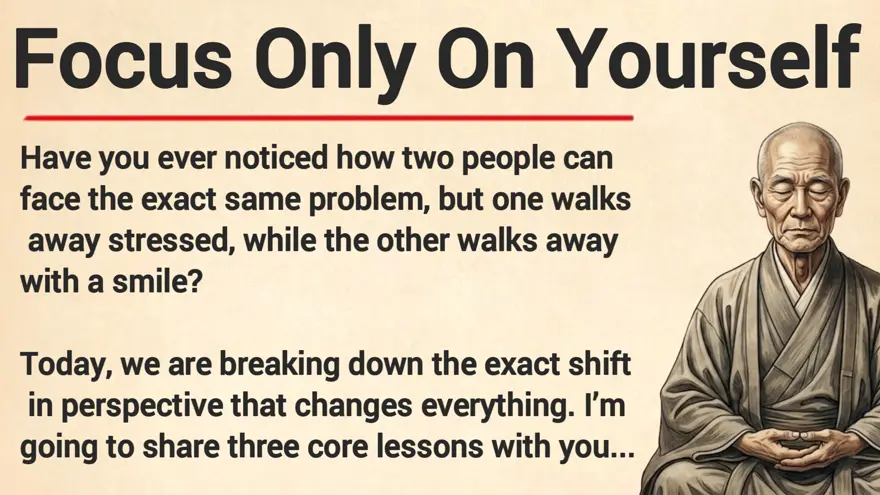
Why do some people stay completely calm during a crisis, while others feel overwhelmed by the exact same situation? The answer doesn’t lie in the challenge itself—it lies entirely in where they place their attention. In a world dominated by constant comparison and endless digital noise, learning to protect your energy and look inward is the single most important skill you can develop.
This Graded Reader English lesson features an inspiring motivational story designed to help you naturally build your English vocabulary and listening comprehension while discovering how to quiet external chaos. As you read through this narrative, pay close attention to the shift in perspective—it contains three core lessons that will completely change the way you look at your personal growth journey.
The Journey Upward: Facing the Dragon
Chapter 1: The Weight of Being
Life is a storm. It is a fierce, relentless challenge, and if you do not give it everything you have, it will change you. It will make you bitter, and instead of bringing light to the world, you will become a part of the darkness.
It is easy to look at how short and brutal life can be and feel terrified. That fear makes you want to hide, to shrink away, and to avoid the world. But you can turn that fear completely upside down. Since you are already in the game of life, and you cannot escape its end, you might as well take the risk. You might as well choose adventure.
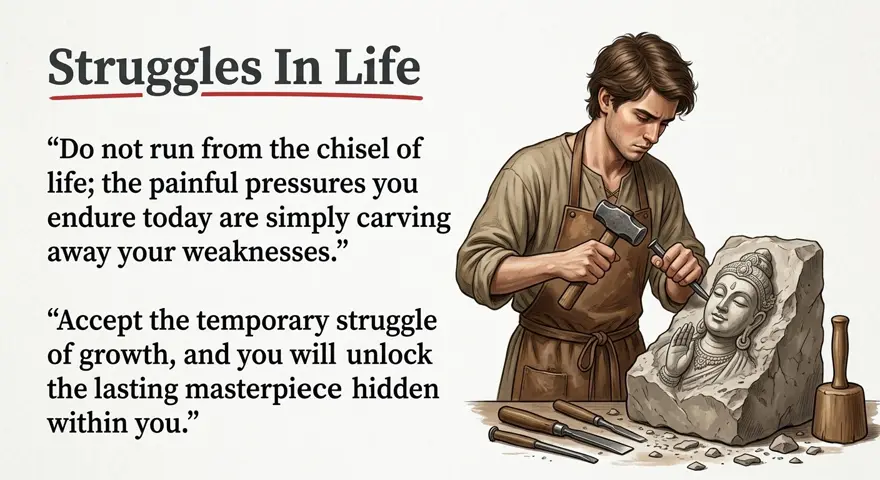
It is painful to start at the very bottom. When you are at the bottom, you are weak. If you truly want to fix what is weak inside you, you must first accept exactly where you are. You must accept that your very first steps are going to hurt.
But a wonderful thing happens when people voluntarily face the things they fear—the things they have been avoiding but know they must overcome to reach their goals. When you stand up straight against your fears, you get stronger. We do not even know how strong a person can become. There is no known limit to it.
If you look around, you will see remarkable people who decided, over decades, to find out what they were truly capable of. They spoke their truth, they moved forward, and they grew stronger and stronger.
So, if you are suffering unbearably right now, part of the reason might be a hard truth you must face: you are not yet everything you could be, and deep down, you know it. To fix your weakness, you must admit your shortcomings, even if it feels humiliating.
Chapter 2: The Danger of the Dark
Sometimes, the gap between who you are and who you want to be is so massive that it paralyzes you. When that happens, you must shrink that gap.
If you choose to hide instead, keeping your unique gifts locked away from the world, a poison begins to grow. You become cynical. You become bitter. Soon, you will start doing dark things. You won’t just stop contributing to the world; you will actually become jealous of the people who are succeeding, and you will want to tear them down. That is the true pathway to hell.
Even in the most terrible situations, the search for gratitude must go on. It is much deeper and much harder to find when things are bleak, but it is necessary. There is a powerful connection between having a grateful heart and loving those who oppose you, even when life is unfair. You have a moral duty to keep your faith, to aim high, and to treat others exactly how you want to be treated, no matter what has happened to you.
Do not let yourself be fooled by selfish desires like the pursuit of power. Instead, decide to speak what you believe to be true, and let go of the consequences. You might feel afraid to let go of control, but if you try to control everything, you miss out on the adventure of life.
Stop comparing yourself to other people. The only person you should compare yourself to is the person you were yesterday. You are your own control group. You have your own specific talents, your own limits, and your own unique tragedies. Comparing yourself to someone else makes no sense because you do not know their hidden struggles or the hidden advantages they were given. Just look at who you were yesterday, and ask yourself: Can I be slightly better today?
The answer is almost always yes.
Chapter 3: Sizing Down the Dragon
If the distance between you and your ideal self is so painful that it stops you from moving, you have created a giant dragon that you don’t know how to fight. What do you do? You scale the dragon down to size.
You shrink it and shrink it until it is small enough that you are actually willing to take a step toward it, no matter how tiny that step is. You cannot leap from where you are to perfection in a single bound. It takes small, steady steps. You have to break the path down into clear, manageable pieces so you can finally move forward.
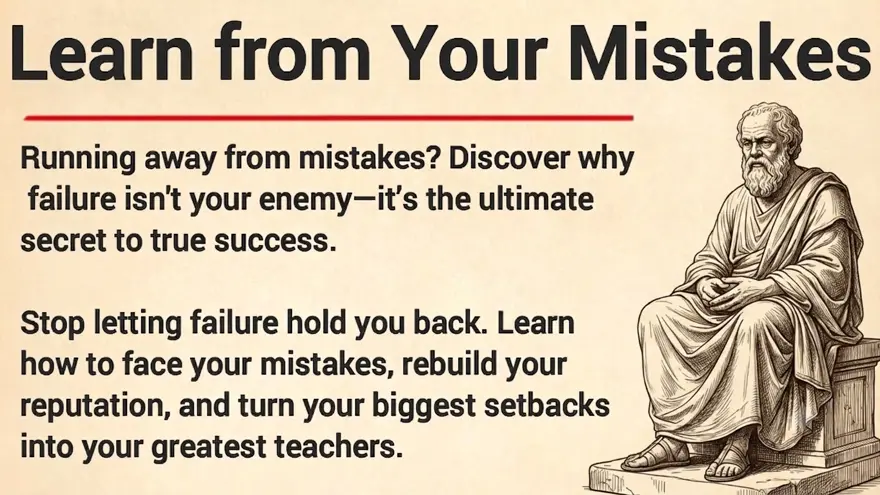
Yes, it hurts to find out where you are wrong. It hurts when someone else’s opinion reveals your blindness or ignorance. But the benefit is immense: you can correct your mistake, and you walk away stronger than you were before.
Never be afraid to ask a seemingly simple question. If you are listening to someone and you do not understand, speak up. You might feel like you are the only one in the room who doesn’t get it, but that is rarely true. By admitting you don’t know, you allow yourself to be taught. If you ask a thousand simple questions and genuinely listen to the answers, you will suddenly know a thousand deep things you didn’t know before. That is how you set your soul right.
Chapter 4: The Price of Standing Still
Many people freeze when they think about the heavy pressure of the long-term future. They see the discomfort waiting for them right now, and they decide the best solution is to do nothing at all. They mistake inaction for a safe, neutral choice.
But as the saying goes: “The heaviest things in life aren’t iron and gold, but unmade decisions.”
If you are stressed right now, it is likely because you have choices to make and you are avoiding them. There is no such thing as true indecision, because time keeps moving and you keep aging. You pay a heavy price for waiting. Choosing not to decide is actually a choice—it is a decision to run away.
People who want power over you will often use fear, pointing to different ways the world might end. It is a powerful trick because the future is always uncertain, and things really do fall apart. We grow old, and we die. It is easy to imagine a disaster.
The real question is not whether a disaster is possible, but what your attitude will be in the face of it. Being naive is foolish. Being cynical is a different kind of misery that only makes bad things more likely to happen. What lies beyond cynicism? Wisdom. And wisdom is not naive; it is profoundly courageous.
Chapter 5: Humility and Exponential Growth
When you have been completely knocked down by life, it is humiliating to realize just how far you have fallen.
Consider what happens after a severe illness. You might have to relearn how to do the simplest tasks—how to button your shirt, or where to place your hands on a keyboard. The knowledge isn’t entirely gone, but the disruption is real. This is why people who have taken a heavy blow in life give up: where they need to start is so low that it wounds their pride to even think about it.
The rule for getting back on your feet is incredibly simple: Make the task small enough that you will actually do it.
If you cannot clean your entire house because it has been messy for twenty years, do not try to do it all at once. Start by opening just one drawer. Look at the mess inside for one minute, and simply think about how you might organize it if you could.
When you are at your lowest point, a tiny problem represents all your big problems combined. It is like seeing the very tip of a reptile’s tail peeking out from under a closed door. It looks small, but it is connected to the whole beast. The danger is that the task feels so small it makes you feel useless. You might think, “Is this really all I can do?”
But true humility is precisely that: starting exactly where you are.
Even if you have to start with a painfully small step, take it. Uphill is always better than downhill. Success grows exponentially. Defeat grows exponentially too—that is the downward spiral into failure. If you start going downhill, you go faster and faster. But if you take a step uphill, you build momentum, and you start moving upward faster and faster.
Chapter 6: Built for the Challenge
Think of how you would encourage a three-year-old child. You wouldn’t give them a task so simple that they could do it when they were two. But you also wouldn’t give them a task that is impossible for them to complete. You give them a challenge that stretches them just past their current limit, with a good chance of success.
Why? Because you want them to grow. When you love a child, you love who they are, but you also love who they could become.
You want to build a confidence that is rooted in real competence, otherwise it is just empty vanity. You achieve this by watching yourself break through your own limits. When you do that, you realize something powerful inside you is capable of rising higher. You realize that the limits you thought you had were just boundaries you placed on yourself.
We do not know where the ultimate upward limit is. We are not built for a life of pure comfort, easy consumption, or total safety. What are we truly built for?
We are built for maximal challenge. We are built to climb.
🙋♂️ Frequently Asked Questions (FAQ)
Q1: What is a Graded Reader English story?
A: A Graded Reader is a story that has been simplified and structured specifically for language learners. It uses a controlled vocabulary level and clear grammatical patterns, allowing English learners to naturally build their reading and listening comprehension skills without feeling overwhelmed.
Q2: How can practicing with motivational stories improve my English fluency?
A: Learning English through motivational stories connects vocabulary and grammar to deep emotional hooks. When you are engaged in an inspiring narrative, your brain retains phrases, idioms, and sentence structures much more effectively than it would through traditional rote memorization.
Q3: What does it truly mean to “focus only on yourself”?
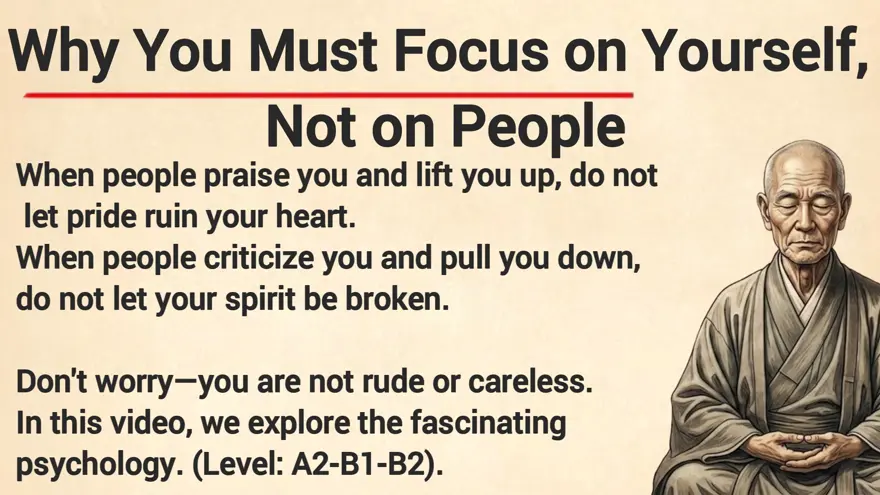
A: Focusing only on yourself means redirecting your time, mental energy, and attention away from external comparisons, societal timelines, and digital noise. It is the conscious practice of measuring your progress solely against who you were yesterday, rather than who someone else is today.
Q4: How do I stop comparing my life progress to others on social media?
A: The most effective way to stop comparing yourself to others is to practice digital intentionality. Recognize that social media is a curated highlight reel, not reality. Shift your focus to daily micro-habits and document your own small wins in a journal to build internal validation.
Q5: Can I use this story for English listening and speaking practice?
A: Yes! You can maximize this lesson by reading the text aloud to practice your pronunciation, pausing to shadow (repeat) the sentences word-by-word, and summarizing the core chapters in your own words to improve your spoken English clarity.
✍️ Conclusion
💡 Note from the Curator
Real growth is a silent, internal process. It is never about running faster than the people around you; it is about staying deeply committed to your own lane, your own pace, and your own progress.
Final Thoughts
True strength begins the moment you stop looking at everyone else’s timeline and start focusing entirely on your own path. By dedicating your energy to self-improvement rather than comparison, you build an unshakeable mindset that can weather any storm.
Over to You: Which part of this story connected with you the most today? Leave a comment below and share your thoughts—I read and respond to our community’s insights every single day!
If this story inspired you, consider sharing it with someone who needs a reminder to stay steady today, and be sure to explore our other Graded Readers to keep sharpening your English skills.


 Life Quotes3 years ago
365 Depression Quotes and Sayings About Depression (Extremely Amazing)
- Inspirational Quotes3 years ago
342 Motivational & Inspirational Quotes
- Inspirational Quotes3 years ago
580 Motivational & Inspirational Quotes Life To Succeed
- Motivational Quotes3 years ago
600 Inspirational & Motivational Quotes About Life to Succeed
- Good Morning Quotes3 years ago
100 Beautiful Good Morning Quotes with Images That Will Enrich Your Day
- Sad Love Quotes3 years ago
110 Sad Life Quotes – Sad Quotes & Sayings About Sadness
- Sad Messages3 years ago
Top 70 Broken Heart Quotes And Heartbroken Sayings
- Inspirational Quotes3 years ago
97 Inspirational Quotes That Will Change Your Life