Hi friends! It is often said that words have immense power. Some words have the strength to heal our hearts, while others can deeply disturb our inner peace.
But have you ever noticed that sometimes people insult you, criticize you, or speak to you with deep bitterness, not because you did something wrong, but simply because they are carrying unhealed anger and negativity inside themselves? The biggest mistake we make in our daily lives is accepting their emotional garbage and allowing it to control our minds.
Note from the Curator
Welcome to this English Graded Reader edition. This intentional lesson is designed specifically for intermediate language learners. As you read through the story of a wise Zen Master and his young disciple, you will discover a powerful new psychological insight: “The 4-Second Rule.” Read until the absolute end to master this essential life lesson while naturally upgrading your English vocabulary, sentence structures, and reading comprehension skills.
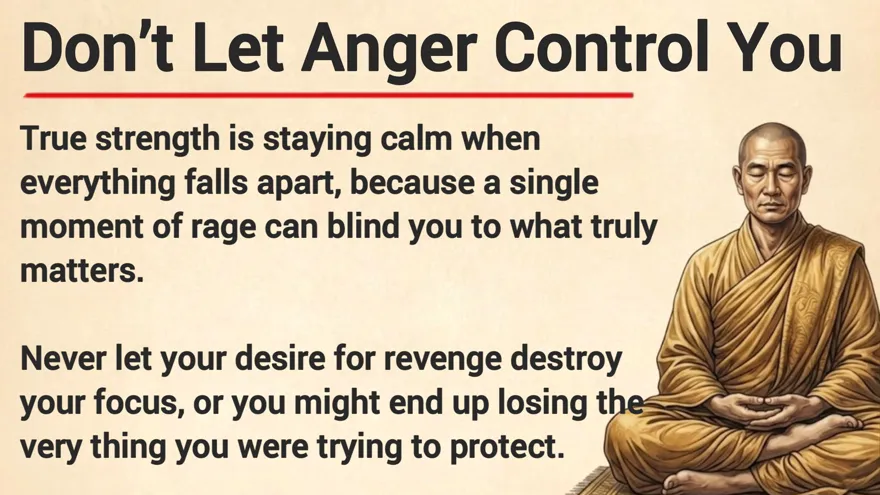
Words have great power. Some words can heal us, while others can deeply hurt us. Often, when people criticize or insult us, it is not because we did something wrong. It is because they are filled with anger and negativity. Our biggest mistake is accepting their negativity and letting it control our minds.
This simple Zen story teaches us how to stay calm, protect our peace, and remain strong when someone tries to provoke us.
The Wise Master and the Angry Man
Far away from the noisy city, there was a peaceful monastery surrounded by beautiful nature. A wise Zen master lived there with his students. He was famous for his patience and deep wisdom. He often told his students:
“We cannot always control what happens around us, but we can always control how we choose to respond.”
One morning, the master and a young student went for a walk. The air was fresh, birds were singing, and everything felt peaceful. Suddenly, a stranger approached them from the opposite direction.
As soon as the man saw the master, his face turned red with anger. For no reason at all, he began shouting insults. “You are all fakes!” the man yelled. “You pretend to be holy, but your wisdom is just an act!”
The Silent Response
The student felt deeply hurt and expected the master to argue back. But the master did not react at all. His face remained completely calm, and he just kept walking.
This made the stranger even angrier. Feeling ignored, he followed them and began insulting the master’s family and ancestors.
The student’s blood began to boil. He could not stand the insults anymore and stepped forward to fight back. But the master gently held the student’s hand and gestured for him to stay quiet.
The man kept shouting for a while longer. However, when he realized that neither the master nor the student would give him a reaction, his anger lost its power. Feeling tired and defeated, he finally walked away.
The Lesson of the Dirty Clothes
As soon as the man left, the student asked anxiously, “Master, how could you stay silent? That man said such terrible things to you. Weren’t you angry? Why didn’t we teach him a lesson?”
The master smiled and said, “I will answer you when we get back to the monastery.”
When they returned, the master went to his room and brought out a cloth bundle. A terrible, foul smell came from it. The master opened it to reveal filthy, muddy, and rotten clothes.
The master handed them to the student and said, “Take off your clean clothes and put these on.”
The student pulled back in disgust. “No, Master! These clothes are filthy and smell horrible. I don’t even want to touch them!”
The master smiled and put the dirty clothes away. “This is the answer to your question,” he said.
Choosing What to Accept
The master explained:
“Just like you refused to accept those dirty clothes because they would ruin your cleanliness, I refused to accept that man’s insults. His anger, hatred, and bitterness belong to him. Until I accept them, they cannot belong to me.”
He continued, “If I had become angry, it would mean I accepted his dirty clothes. I would be wearing his negativity. Then, what would be the difference between him and me?”
The master reminded his student that people in this world will often try to throw their “garbage”—jealousy, anger, and hatred—onto others. But it is always up to us whether we choose to pick it up or leave it behind.
The Takeaway for Our Lives
When you try to grow and succeed, not everyone will be happy for you. Some people will criticize you or try to drag you down. Their goal is often to disturb your peace and distract you from your goals. If you get angry, you let them win.
True strength is not about answering every insult or proving yourself to everyone.
True strength is keeping your mind calm when others try to disturb your peace.
Never let someone else’s negativity ruin your day. Don’t wear the dirty clothes of their anger. Keep your mind clean, protect your peace, and move forward with dignity.
The greatest takeaway from this story is that your peace of mind is your most valuable possession, and you are the only person who can protect it.
When people treat you badly, insult you, or try to start an argument, they are offering you a bundle of “dirty clothes.” If you get angry, yell back, or spend hours worrying about what they said, you are actively choosing to take those dirty clothes and put them on. You are letting their bad mood ruin your clean mind.
Always remember:
You cannot control what other people do or say.
You can always control how you choose to react.
True strength does not mean winning every argument or shouting louder than your enemies. True strength is having the power to remain completely calm, smile, and walk away. Leave their negativity with them—it belongs to them, not to you. Keep your mind clean and keep moving forward.
✅️ Motivation life lesson from this story
Here is a deep motivational breakdown of the life lessons you can learn from this Zen story, organized to help you build an unbreakable mind and protect your energy.
1. The Core Truth: You Always Hold the Power
The absolute most important lesson from this story is wrapped up in the Master’s words:
“What happens around you may not always be in your control, but how you react to it is always in your control.”
In life, you will encounter rude drivers, toxic colleagues, jealous friends, and internet trolls. If your happiness depends on everyone being nice to you, you will always be miserable. The Master teaches us that true freedom is not a life without storms; it is being the calm center inside the storm. You cannot control the garbage people throw, but you have 100% control over whether you catch it.
2. Insults are “Projections,” Not Your Reality
When the angry stranger screamed at the Zen Master, his words had nothing to do with the Master’s actual character. The stranger was full of internal bitterness, self-hatred, and anger, and he was simply looking for a target to dump it on.
When people insult, criticize, or try to discourage you, it is almost never about you. It is a reflection of their own internal pain.
A person who is genuinely happy, fulfilled, and at peace will never go out of their way to tear someone else down.
Only broken people try to break others.
Once you realize that their venom is just a symptom of their own sickness, your anger turns into pity, and their words lose all their power to hurt you.
3. The Danger of “Wearing Dirty Clothes”
The metaphor of the dirty, foul-smelling clothes is a powerful psychological tool for daily life.
When You Choose To…
The Metaphorical Action
The Reality
Argue with a toxic person
Reaching out and grabbing the muddy clothes.
You let their negativity pollute your mind and ruin your day.
Get defensive or shout back
Putting the dirty clothes on over your clean ones.
You sink to their level and become just as toxic as they are.
Remain silent and walk away
Refusing to touch the bundle.
The garbage stays with them, and you stay clean and at peace.
Every time you let a passive-aggressive comment or an insult ruin your mood, you are choosing to put on someone else’s dirty laundry. Refuse the delivery. Let them keep their own mess.
4. Silence is Ultimate Strength, Not Weakness
To the young disciple, the Master’s silence looked like cowardice. He wanted to use logic, argue, and fight back. This is what our egos always want us to do because the ego is fragile and demands respect.
But the Master knew a psychological secret: Anger is a fire that desperately needs the oxygen of your reaction.
When someone attacks you, they want a reaction. They want to see you get upset, stammer, or scream because it proves they have control over your emotions. When you respond with absolute, calm indifference, you starve the fire of oxygen. Your silence is a massive shield that signals: “You are speaking, but you are not important enough to affect my mind.”
5. Excellence Attracts Critics
Notice that the disciple felt proud and peaceful when everything was quiet, but panicked the moment a critic appeared. As you try to grow, build a business, get in shape, or succeed in life, you will attract haters.
Mediocrity loves company. When you start leveling up, it reminds insecure people of their own lack of effort. Because they lack the courage to climb up to your level, they try to drag you down to theirs.
Do not stop your journey to throw stones at every barking dog. Expect the critics, ignore them, and let your massive success be your noise.
6. A Daily Action Plan for Inner Peace
To live out the lesson of this story, practice these three steps whenever someone provokes you:
Pivot to Execution: Immediately put your energy back into your work, your goals, or your loved ones. Do not waste a single drop of your precious life force on someone who doesn’t matter.
The 4-Second Rule: When someone insults or triggers you, pause for 4 seconds. Do not speak. Breathe. This stops your brain’s automatic “fight or flight” reflex.
The Mental Filter: Ask yourself, “Is this person someone I respect?” If the answer is no, treat their comment like a delivery of rotting garbage. Say internally: “This belongs to you, not me,” and drop it.
✅️ Learn English from this story:
Learning English through stories is one of the most effective ways to master the language because you see vocabulary and grammar used in real-life contexts.
Below is an English lesson based directly on the Zen story. It highlights key vocabulary, explains essential idioms, and breaks down the grammar so you can easily understand and use these concepts yourself.
Part 1: Key Vocabulary Definitions
When learning new English words, it is best to understand how they function in a sentence. Here are the most important words from the story.
Monastery(Noun): A quiet place where monks live and practice their religion far away from regular cities.
Disciple(Noun): A student or follower who learns from a wise teacher or leader.
Wisdom(Noun): The ability to use your knowledge and experience to make good decisions and judgments.
Hypocrite(Noun): A person who pretends to have good virtues, morals, or beliefs that they do not actually possess. In short, someone who says one thing but does the opposite.
Furious(Adjective): Extremely angry. This is a much stronger word than just “angry.”
Tolerate(Verb): To accept or endure something unpleasant or difficult without complaining or fighting back.
Filthy(Adjective): Extremely dirty or disgusting.
Pollute(Verb): To make something dirty, impure, or unclean. While we often use it for nature, the story uses it to describe making our minds unclean with bad thoughts.
Sovereignty(Noun): Absolute power, control, or independence over yourself and your own choices.
Part 2: Idioms and Phrasal Verbs Explained
Native English speakers frequently use phrasal verbs (verbs combined with particles like “up” or “down”) and idioms. The story includes several common expressions you can use in daily conversation.
Blood Began to Boil
When the story says the student’s “blood began to boil,” it means he became extremely angry. You use this expression when a situation makes you feel furious or outraged.
Example: “My blood began to boil when I saw him lying to my face.”
Lash Out
To “lash out” means to suddenly attack someone, either physically or with harsh words. The angry stranger lashed out at the Zen master without any good reason.
Example: “She was stressed about work, so she lashed out at her family.”
Pull Someone Down
To “pull someone down” means to destroy someone’s happiness, success, or confidence. Negative people often try to pull others down to their level.
Example: “Don’t let their jealousy pull you down; keep working hard.”
Fight Back
To “fight back” means to defend yourself or resist an attack. The student wanted to fight back, but the master chose to remain completely silent.
Example: “If someone treats you unfairly, you have the right to fight back.”
Part 3: Important Grammar Insights
Understanding the structure of the language helps you write and speak more accurately. Let’s look at two major grammar concepts used in this story.
1. The Unreal Conditional (Second Conditional)
The master uses a special grammar structure when he explains his actions to the student. He says: “If I had become angry… what would be the difference between him and me?”
This is an example of a conditional sentence used to talk about imaginary situations in the past. We use “If + past perfect” in the first part, and “would + verb” in the second part to show what the imaginary result would be. The master did not actually get angry, but he is imagining what would happen if he did.
2. Quotation Marks and Direct Speech
The story provides a great lesson on how to report what people say using direct speech. Notice how punctuation works:
“You people are hypocrites,” the man shouted.
In English, the comma goes inside the quotation marks at the end of the spoken sentence, not outside. If it is a question, the question mark also goes inside: “Why did you tolerate everything so calmly?” asked the disciple.
Part 4: Practical Practice Exercise
To make sure you truly understand these English lessons, try to complete the following three sentences using the vocabulary and idioms you just learned:
Instead of getting angry when his coworker insulted him, David chose to remain calm and protect his _______.
When the customer started shouting, the store manager refused to _______ and kept a polite smile on her face.
Successful people do not care when critics try to _______ them _______; they just keep moving forward.
Q1: What is the main moral of the “Power of Not Reacting” story?
A: The main lesson is that you cannot control how other people behave, but you can always control how you choose to respond. True strength means keeping your mind calm and refusing to accept the emotional “garbage” (anger, jealousy, or bitterness) that negative people try to throw at you.
Q2: What is “The 4-Second Rule” mentioned in the story?
A: The 4-Second Rule is a simple psychological trick to stop yourself from reacting in anger. When someone insults or provokes you, pause and breathe deeply for 4 seconds before speaking or acting. This brief pause stops your emotional brain from taking over and allows your rational mind to make a calm choice.
Q3: Why does the Zen Master compare insults to “dirty clothes”?
A: The Master uses dirty clothes as a metaphor for other people’s negative emotions. Just as you would refuse to wear physical clothes that are muddy and foul-smelling, you must refuse to accept another person’s anger. If you get angry back, it means you have willingly put on their dirty clothes.
Q4: Is staying silent a sign of weakness when someone insults you?
A: No, in Zen philosophy, silence born of self-mastery is a sign of absolute power. It signals to the aggressor that their words do not possess the power to alter your emotional state. It starves their anger of the reaction they are desperately looking for.
Q5: How does reading motivational stories help me learn English?
A: Reading short stories exposes you to vocabulary, grammar patterns, and idioms in a natural, real-life context. Because the story keeps you emotionally engaged, it is much easier for your brain to remember new words and phrases compared to studying dry grammar lists.
Q6: What level of English learner is a “Graded Reader” story for?
A: This story is formatted as an intermediate (B1/B2) Graded Reader. It uses simple sentence structures and accessible, high-impact vocabulary words (like projection, indifference, and dignity) that help language learners transition to fluent daily communication.
Conclusion
The Ultimate Takeaway: Guard Your Inner Fortress
The deepest truth of this Zen story is beautifully simple: what happens around you in life may not always be in your control, but how you choose to react to it is completely in your hands. True strength is never about replying to every harsh insult, arguing with critics, or trying to prove your worth to everyone you meet. True personal power is remaining completely calm and grounded when others actively try to disturb your peace.
Never allow someone else’s toxic mindset to pollute your thoughts or ruin your day. Do not willingly wear the dirty clothes of someone else’s anger, jealousy, or deep-seated hatred. Protect your mind, protect your peace, and continue moving forward on your journey with dignity, silence, and inner strength.
Let’s Connect & Learn!
Share the Wisdom: If this inspirational story helped improve your English and brightened your day, share it with a friend who needs this motivational reminder today!
Leave a Comment Below: What was your favorite vocabulary word from today’s graded reader? How do you practice protecting your peace against negative people?